

Mobile cranes | All-terrain, rough-terrain and truck cranes
Mobile cranes are used to lift and position materials across construction sites, industrial facilities, infrastructure projects, and other lifting environments. Available configurations include all-terrain cranes, rough-terrain cranes, and truck cranes, with selection based on lifting capacity, working radius, boom configuration, site conditions, and transport requirements.
For equipment distributors, rental companies, contractors, and project procurement teams, model selection should be based on verified load charts, operating conditions, destination-market requirements, and after-sales support.
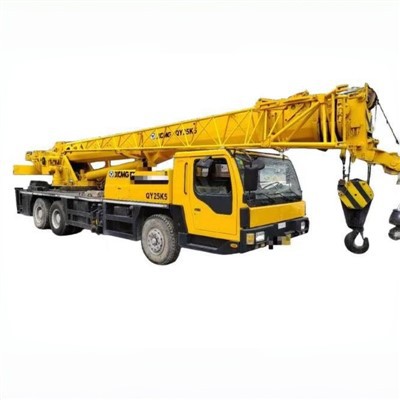
Product overview
Product range
Mobile crane configurations cover different lifting capacities and mobility requirements. The stated range is 25–300 metric tons; confirm available models and rated capacities before publication.
Main configurations
All-terrain cranes, rough-terrain cranes, and truck cranes serve different road travel, site access, and lifting requirements.
Key selection factors
Evaluate rated lifting capacity at the required working radius, boom length, lifting height, outrigger configuration, operating weight, and transport dimensions.
Mobile crane types and applications
|
Crane type |
Typical operating conditions |
Key selection factors |
|
All-terrain crane |
Road travel between sites and lifting operations on suitable job sites |
Rated load chart, axle configuration, road compliance, and site conditions |
|
Rough-terrain crane |
Construction sites with uneven or unpaved ground |
Ground clearance, traction, steering configuration, and lifting capacity |
|
Truck crane |
Projects requiring road transport between multiple locations |
Chassis configuration, axle loads, transport regulations, and lifting requirements |
Select the crane according to the actual load, working radius, ground conditions, and local transport regulations rather than maximum lifting capacity alone.
Technical specifications
The following specifications are for the stated AT-100 model and must be checked against the approved manufacturer datasheet before publication.
|
Technical parameter |
Stated specification |
|
Model |
AT-100 |
|
Maximum rated lifting capacity |
100 metric tons — confirm load chart conditions |
|
Working radius at stated maximum capacity |
3.0 m — verify against the official load chart |
|
Main boom |
5 sections; 12–50 m — confirm configuration |
|
Jib length |
10.5–17.5 m |
|
Jib offset angles |
0°, 20°, 40° |
|
Maximum lifting height |
68 m with jib — confirm operating configuration |
|
Engine |
Cummins L9 — verify actual engine specification |
|
Engine rated power |
300 kW — verify model-specific data |
|
Emission specification |
Euro V / Tier 4 Final — confirm the applicable engine and market configuration |
|
Transmission |
ZF Powershift — verify model and gear configuration |
|
Transmission speeds |
6 forward, 2 reverse — confirm |
|
Outrigger spread |
7.2 m × 7.0 m — confirm measurement convention and configuration |
Actual lifting capacity depends on working radius, boom and jib configuration, counterweight, outrigger deployment, and the applicable load chart. Maximum lifting height and other performance figures must also be linked to their stated operating configurations.
Configurations and customization
Lifting equipment
Winch arrangements and reeving configurations can be specified according to the lifting task and the approved crane design.
Counterweights
Confirm available counterweight configurations, individual weights, installation procedures, and transport requirements for each model.
Operator cab and controls
Cab features, climate control, joystick controls, and cab tilting options depend on the selected model and configuration. Confirm available safety and operator protection features in the technical documentation.
Fleet monitoring
Where supported, telematics and CAN-bus interfaces can provide equipment information and diagnostic data. Confirm available functions, connectivity, and regional service coverage.
Structural fabrication
Confirm the steel grades, component specifications, cutting processes, and welding procedures used for the selected crane model.
Welding and inspection
Where applicable, provide welding procedure documentation and records of ultrasonic testing (UT) or magnetic particle inspection (MPI) for specified components and joints.
Machining and assembly
Document applicable machining tolerances, critical alignment checks, assembly inspections, and equipment-specific acceptance criteria.
Factory testing
Describe the actual factory acceptance testing (FAT) procedures, functional checks, hydraulic tests, and load tests performed on each model. State the applicable test standard and provide supporting records where available.
Quality management and compliance
List only current, applicable certifications and conformity documents. ISO 9001 certification, CE conformity documentation, and GOST/EAC requirements should be identified separately according to the manufacturer's status, equipment configuration, and destination market.

OEM, wholesale and bulk supply
Fleet and project orders
Confirm model availability, order quantities, production schedules, and delivery milestones for multi-unit procurement.
OEM and customization
Available options may include approved paint schemes, branding, documentation, and market-specific configurations. Confirm the scope of customization before quotation.
Spare parts
Spare-parts packages can be specified according to the equipment configuration and maintenance requirements. Confirm stock availability, lead times, and the parts included in each package.
Shipping and after-sales support
Transport planning
Shipping arrangements depend on crane dimensions, operating weight, axle configuration, dismantling requirements, and the destination port. Confirm whether transport requires road delivery, specialized trailers, Ro-Ro shipping, or other arrangements.
Technical documentation
Confirm the availability of operating manuals, maintenance instructions, hydraulic schematics, electrical diagrams, load charts, and spare-parts catalogs for the supplied model.
Commissioning and technical support
Specify available remote assistance, operator training, commissioning services, warranty coverage, and on-site support arrangements by destination market.
Lead time and delivery terms
Production and shipping schedules should be confirmed against the order configuration, production capacity, destination, and agreed delivery terms.
Frequently asked questions

Request a technical quotation
To support accurate model selection and quotation, please provide:
Required lifting capacity and working radius
Required lifting height and boom configuration
Site conditions and intended application
Destination country and delivery location
Order quantity and expected delivery schedule
Applicable technical or regulatory requirements
Best Heavy Industry (Shandong) Co., Ltd. is one of the most professional mobile crane manufacturers and suppliers in China, featured by quality products and good price. Please rest assured to buy cheap mobile crane made in China here from our factory. Contact us for more details.
Large Wheeled Crane, mobile crane