

Product overview
Heavy-duty industrial cranes lift and move materials in manufacturing plants, warehouses, steel facilities, and other industrial environments. Available configurations include overhead cranes, gantry cranes, and jib cranes for different lifting capacities, spans, and installation conditions.
For distributors and equipment dealers
Multiple crane types and configuration options support different customer requirements and industrial markets.
For engineering companies and contractors
Crane selection can be based on rated capacity, span, lifting height, duty classification, operating environment, and control requirements.
For industrial facilities
Options for lifting mechanisms, drive systems, and control modes can be specified according to material handling tasks and site conditions.


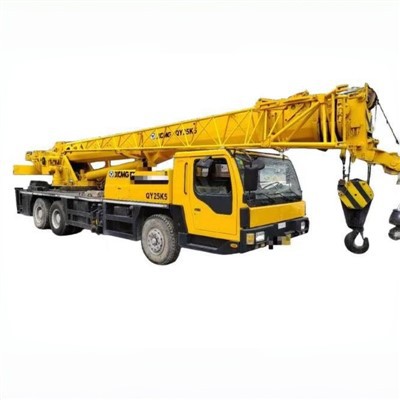
Crane types and applications
|
Crane type |
Indicative capacity range |
Span / reach |
Typical applications |
|
Single girder EOT crane |
1–20 t |
Up to 31.5 m |
General manufacturing, warehouses, maintenance bays |
|
Double girder EOT crane |
5–500 t |
Up to 35 m and beyond |
Heavy machinery assembly, steel facilities, turbine halls |
|
Gantry crane (full or semi-gantry) |
5–300 t |
Up to 40 m and beyond |
Outdoor stockyards, precast concrete yards, shipyards |
|
Jib crane |
0.25–5 t |
Up to 10 m radius |
Workstation handling, machine loading, localized lifting |
The ranges above are indicative and must be confirmed against the manufacturer's actual product range and engineering design. Available capacity and span depend on the crane configuration, structural design, and operating requirements.
Technical specifications
Crane specifications should be matched to the lifting task, installation conditions, and required operating frequency.
|
Parameter |
Available options or specification |
|
Rated lifting capacity |
Model-dependent; confirm required load and available capacity |
|
Span / jib reach |
Configured according to building dimensions and handling area |
|
Lifting height |
Confirm required hook travel and available headroom |
|
Lifting mechanism |
Wire rope hoist or chain hoist, subject to crane type and capacity |
|
Duty classification |
Confirm according to the applicable FEM, ISO, or project-specific classification |
|
Power supply |
Original offering: 380–480 V, 50/60 Hz, three-phase; confirm regional compatibility |
|
Control modes |
Pendant control, radio remote control, or operator cabin |
|
Drive control |
Direct control, soft starter, or variable frequency drive (VFD), according to configuration |
|
Safety devices |
Options may include overload protection, travel limit switches, emergency stop, and anti-collision systems |
Final specifications should be confirmed in the technical proposal and approved drawings before ordering.
Configuration and customization
Span and headroom
Crane geometry and girder configuration can be designed around available building dimensions, required hook height, and installation constraints.
Drive and control systems
Pendant controls, radio remote controls, cabin operation, and VFD-controlled drives can be specified according to operator access and handling requirements.
Environmental configurations
Indoor, outdoor, high-temperature, and hazardous-area configurations should be selected according to actual operating conditions. ATEX or IECEx certification must be confirmed for the specific equipment and configuration supplied.
Automation integration
PLC interfaces, load-weighing systems, remote diagnostics, and automated movement functions can be evaluated for projects requiring integration with existing industrial systems.
Inspection requirements should be defined according to the crane design, applicable standards, and project specifications.
Material verification
Steel grades, material certificates, and traceability requirements can be specified for structural components. Available materials and documentation should be confirmed before ordering.
Welding and inspection
Welding procedures and inspection methods, such as ultrasonic testing (UT), magnetic particle testing (MT), or radiographic testing (RT), should be established according to the approved inspection plan.
Dimensional and load testing
Factory acceptance testing can cover dimensional checks, functional tests, and load tests according to the applicable requirements. Test loads, procedures, and acceptance criteria should be confirmed in the project documentation.
Surface treatment
Surface preparation, primer, topcoat, and dry film thickness can be specified according to the operating environment and project requirements.
OEM, wholesale and bulk supply
OEM and project-based manufacturing
Crane configurations can be developed against confirmed technical specifications, approved drawings, electrical requirements, and project documentation.
Crane components and kits
Hoists, end carriages, and selected crane components may be supplied to local crane builders and system integrators, subject to the manufacturer's product range.
Manufacturing capabilities
CNC cutting, welding, machining, and stress-relieving processes should be confirmed against the actual factory equipment and production scope.
Packaging and logistics
Large crane structures can be divided into transportable sections where the design permits. Packaging, container loading, and breakbulk arrangements depend on component dimensions, shipping routes, and delivery terms.
Installation, documentation and after-sales support
Technical documentation
Available documents may include general arrangement drawings, electrical schematics, operation manuals, material certificates, inspection reports, and applicable conformity documentation.
Installation and commissioning
Installation instructions and remote technical assistance can be arranged according to the project scope. On-site supervision should be confirmed for the destination and installation schedule.
Spare parts and maintenance
Spare parts such as wire ropes, brake components, contactors, and gearbox components can be specified according to the supplied crane model. Availability, delivery time, warranty, and maintenance support should be confirmed in the commercial offer.
Frequently asked questions

Request a technical proposal and quotation
To evaluate a suitable crane configuration, please provide the following information:
Required lifting capacity: Maximum load to be handled.
Span and lifting height: Required coverage and hook travel.
Operating conditions: Indoor or outdoor installation, duty requirements, ambient conditions, and lifting frequency.
Power and controls: Available electrical supply, preferred control mode, and automation requirements.
Project documentation: Site drawings, runway details, applicable standards, and any special safety or certification requirements.
Best Heavy Industry (Shandong) Co., Ltd. is one of the most professional crane manufacturers and suppliers in China, featured by quality products and good price. Please rest assured to buy cheap crane made in China here from our factory. Contact us for more details.
